

This post contains affiliate links.
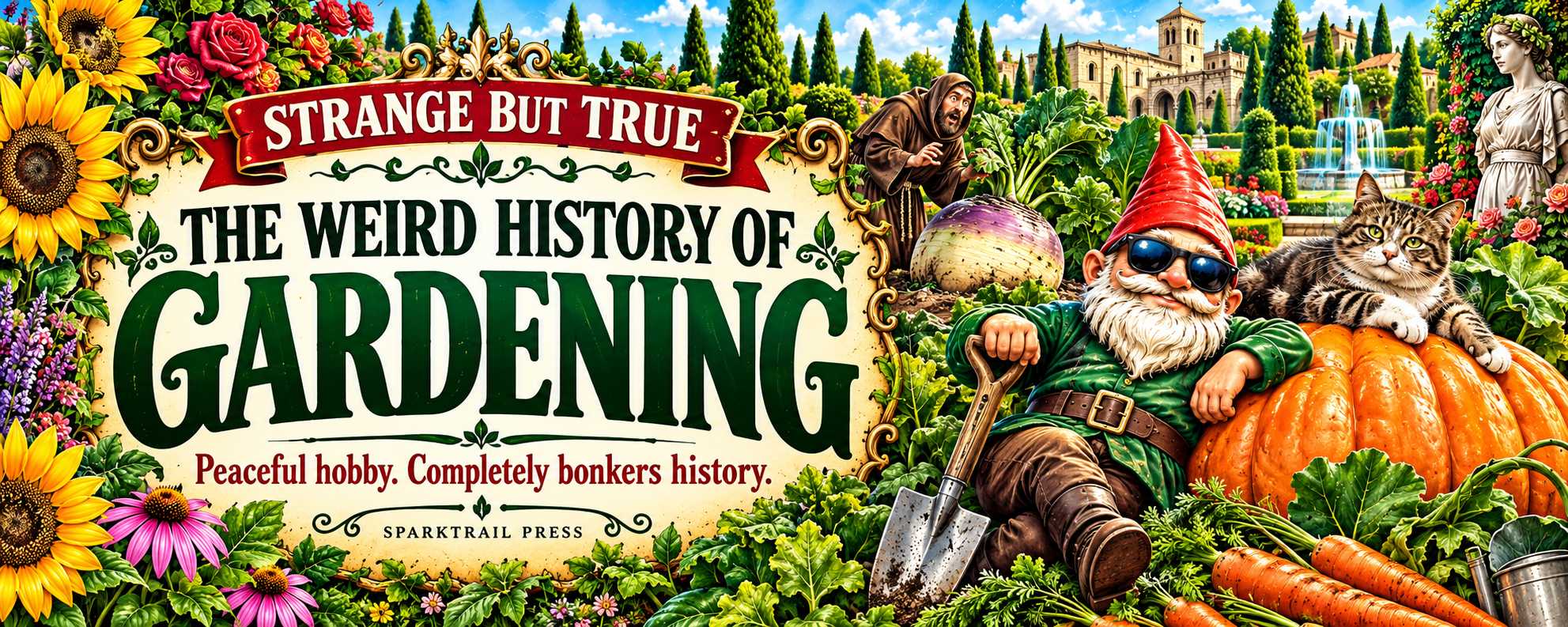
A garden looks like a sensible place to relax. There are flowers to admire, tomatoes to pick, and perhaps a small ceramic gnome who appears to have his life under control. From a distance, the whole arrangement suggests peace, patience, and fresh air. Then you discover what people have actually done in the name of gardening.
Suddenly, there are poisonous plants, enormous pumpkins, royal egos, expensive obsessions, and neighbors conducting a bitter campaign over a hedge.
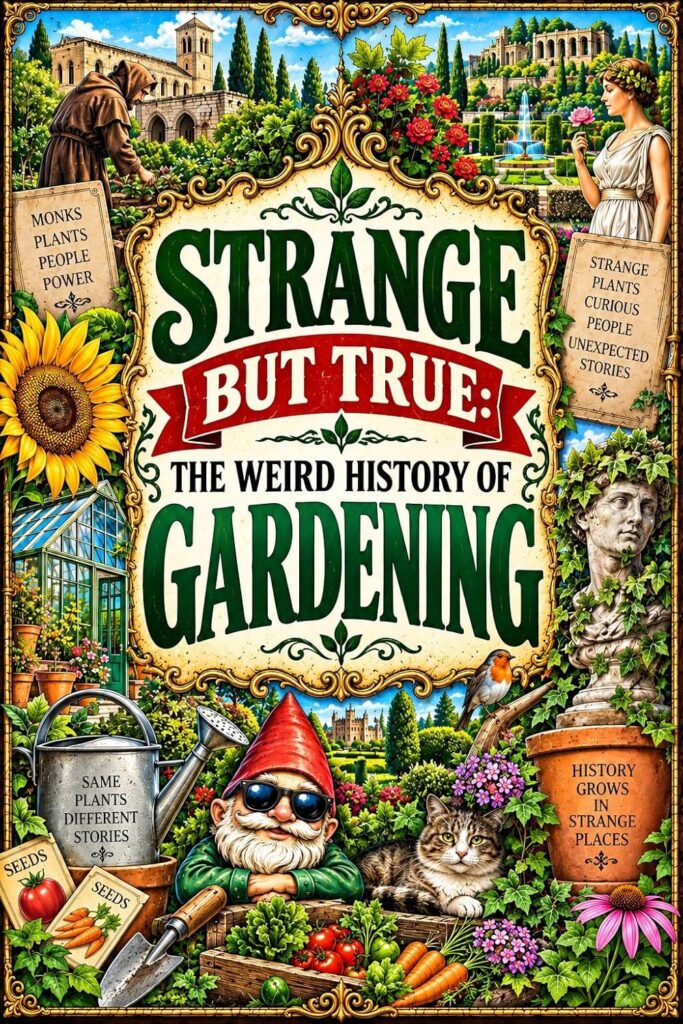
STRANGE BUT TRUE: THE WEIRD HISTORY OF GARDENING, from SparkTrail Press, explores the surprising history hiding beneath those tidy flower beds. It follows the people who turned growing plants into a source of food, medicine, wealth, fashion, competition, and occasionally spectacular nonsense. Anyone who thinks gardening history consists entirely of someone planting a carrot is in for a surprise.
A Little Dirt and a Very Large Ego
People have never been content simply to grow what they need. Once the vegetables were sorted out, someone inevitably wanted a more impressive garden than the person next door. Add royal money to that impulse, and a patch of greenery becomes a declaration of power.
The book travels from ancient gardens and Roman courtyards to medieval plots where monks cultivated medicinal plants alongside food. From there, it explores royal gardens, elaborate fountains, carefully shaped hedges, and landscapes designed to make visitors feel suitably impressed. Apparently, owning a palace was sometimes insufficient. The shrubbery also needed to explain how important you were.
That mixture of practical growing and extravagant ambition runs throughout the book. A garden might feed a household, display a fortune, or provide the setting for an obsession. Sometimes it manages all three.
When Plants Become an Obsession
For many gardeners, buying one interesting plant leads to buying another. Before long, the windowsills are full and someone is discussing whether the dining room really needs to remain a dining room.
This book follows that enthusiasm into the world of plant hunters, orchid collecting, and the movement of living plants across oceans. It explores the Wardian case and its role in transporting plants, along with the Victorian appetite for unusual specimens. Tulip mania also appears in a history where a flower could become considerably more than something nice to put in a vase.
These stories reveal gardening as part of a much larger human adventure. Plants connect exploration, science, commerce, and fashion. They also expose our remarkable ability to become convinced that the next acquisition will finally make the collection complete.
Beautiful, Bizarre, and Occasionally Dangerous
Beauty is only part of the story. The Weird History of Gardening also explores poisonous gardens, strange fertilizers, early pest control, and gardening superstitions that proved difficult to uproot.
There is something wonderfully unsettling about a plant that looks lovely while being a terrible candidate for a salad. There is also plenty of humor in the experiments people tried while attempting to improve their crops. Gardening requires patience, but human beings have always been interested in shortcuts, secret ingredients, and advice delivered with suspicious confidence.
The book brings that curiosity to familiar features such as lawns, lawnmowers, topiary, and garden gnomes. Even the ordinary backyard turns out to have a history worth digging into.
Competitive Gardening Gets Serious
Then come the giant vegetables.
A pumpkin that requires machinery to move has clearly exceeded the expectations of an ordinary vegetable patch. It belongs to a world of record-breaking crops, competitive growing, and people whose idea of a relaxing hobby involves producing something too large to fit through the gate.
Flower shows offer another kind of competition. The setting may be polite, but the determination behind a carefully grown bloom can be fierce. Add gardening feuds and arguments over hedges, and the peaceful garden starts looking like a battlefield with better refreshments.
The book also explores Victory gardens, British allotments, city gardens, heirloom seeds, seed catalogs, and NASA’s attempts to grow plants in space. Its scope stretches from everyday growing to extraordinary ambition.
For gardeners, history lovers, and readers who enjoy unusual true stories, STRANGE BUT TRUE: THE WEIRD HISTORY OF GARDENING offers an entertaining look at a hobby with surprisingly unruly roots. You may come away looking at your flower beds differently. You may also feel better about that one tomato plant that somehow became an entire backyard project.
Explore STRANGE BUT TRUE: THE WEIRD HISTORY OF GARDENING on Amazon.
This post contains affiliate links.