

This post contains affiliate links.
There is a particular kind of gardener who can lose track of a watering can because something interesting has landed in the hedge. A flash of color, an unfamiliar call, a bird behaving just differently enough to make you stop—suddenly, the garden has become a place of discovery.
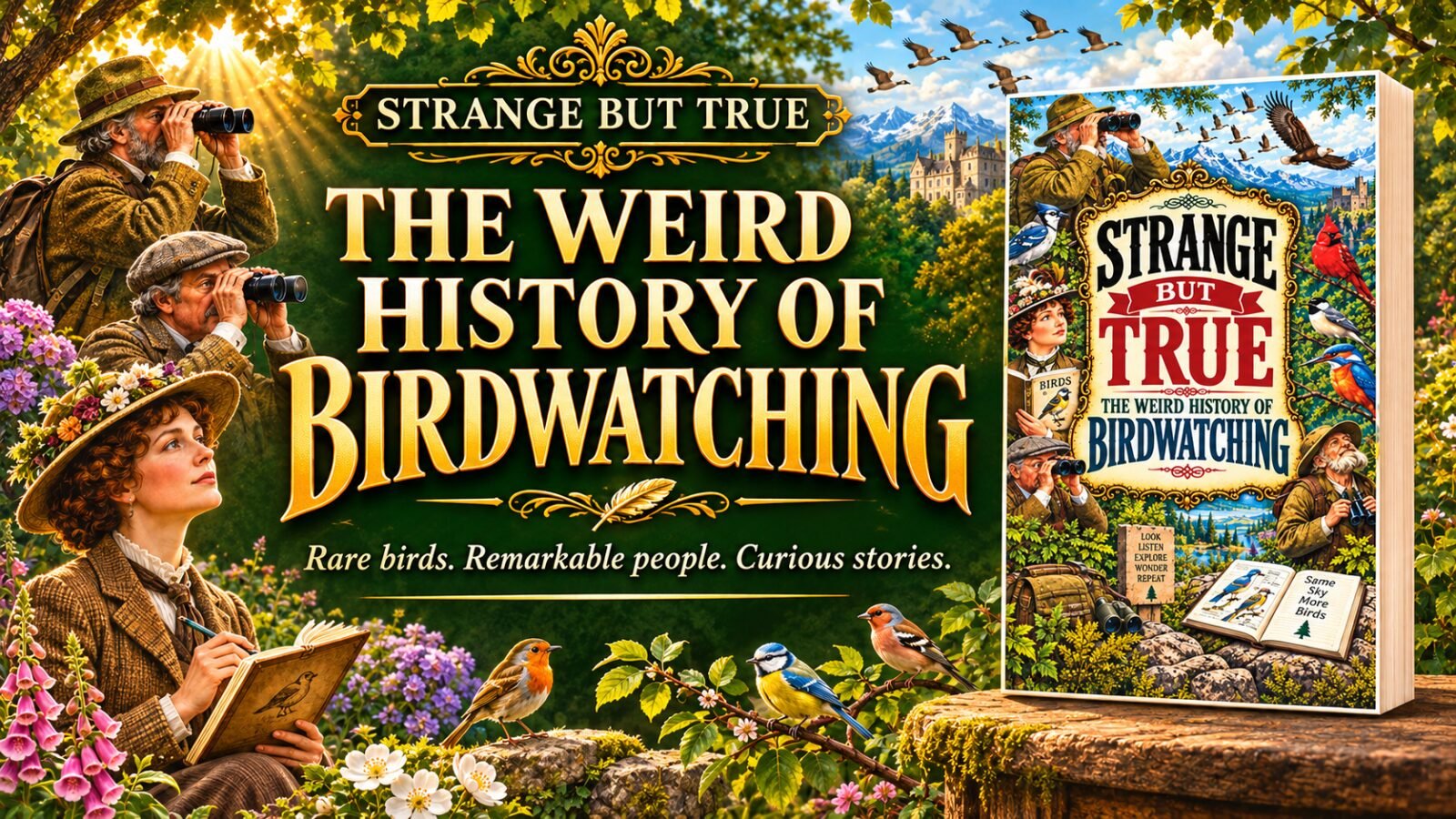
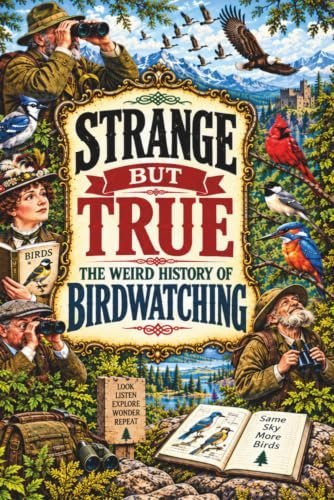
Strange But True: The Weird History of Birdwatching is for that curious streak. Our paperback turns attention toward the people behind the binoculars: their discoveries, rivalries, enthusiasms, and sometimes extraordinary determination to see one more bird.
Explore The Weird History of Birdwatching in paperback on Amazon →
This article features our own book and contains Amazon affiliate links. If you purchase through a link, we may earn a commission at no extra cost to you.
A Birdwatching Book About Curiosity—and the People It Captures
The full subtitle sets out the book’s territory: Rare Birds, Strange Binoculars, Obsessive Collectors, Birding Feuds, Accidental Discoveries, Epic Migrations, and Other Curious Stories.
There is plenty of room for human drama in that list. The birds may be following their own routines, but the people watching them bring ambition, patience, competition, and the occasional very strong opinion. A quiet pastime can acquire a surprisingly noisy history.
For a Happy Garden Hub reader, that is part of the attraction. You do not have to travel to a distant reserve or recognize every visitor to enjoy the subject. A garden gives you a reason to start noticing; a history book gives you a larger world of stories to connect with what you see.
Three moments from birdwatching and bird protection history show just how much that world has changed.
When a Christmas Outing Became a Bird Count
One change began with a different answer to a simple question: what should people do when they go out looking for birds?
Audubon traces the Christmas Bird Count to Frank M. Chapman’s proposal in 1900. He offered a bird census as an alternative to holiday hunts in which teams competed over the animals they killed. That first Christmas Day effort involved 27 participants at 25 locations. Read Audubon’s history of the Christmas Bird Count.
The change was small enough to describe in a sentence, yet it transformed the purpose of the outing. Looking, identifying, and recording became the point. A competitive urge could be directed toward learning what was alive around you.
That is an appealing thought for anyone who has ever watched a garden for a few extra minutes because a familiar bird might return.
The Women Who Challenged Feathered Fashion
The history of our interest in birds also includes people who challenged what society considered attractive or acceptable.
The RSPB records that Emily Williamson founded the Society for the Protection of Birds in 1889 in response to birds being killed for their feathers. Other women joined the effort, including Eliza Phillips and Etta Lemon. Their campaigning brought bird protection into conversations about fashionable hats, shopping habits, and public responsibility. Explore the RSPB’s account of its female founders.
Here, the interesting characters are not only the people searching a skyline with binoculars. They are also the people writing, organizing, and questioning the customs around them. Caring about birds could become a challenge to a whole way of doing things.
The Field Guide That Helped People See Differently
There is a familiar little puzzle in birdwatching: you have seen the bird, but can you work out what it was before it disappears?
The Linda Hall Library’s exhibition describes Roger Tory Peterson’s approach to that problem. His A Field Guide to the Birds, published in April 1934, emphasized visual identification and used arrows to draw attention to useful identifying marks. The exhibition explains how his compact approach helped shape the modern field guide. Read the library’s history of Peterson’s field guide.
It is a story about making knowledge usable in the moment. A glimpse of a wing, a pattern on a head, or the shape of a bird in flight could become a clue. The act of looking became more deliberate—and, for many people, more absorbing.
Why Gardeners May Enjoy This Paperback
Gardening rewards attention. You notice which plant is flowering, what changed after the rain, and where the life in your yard seems busiest. Birdwatching draws on that same pleasure in paying attention.
The Weird History of Birdwatching offers something to read when you want the stories around that pleasure: curious people, unusual pursuits, and the long human fascination with birds. Its subtitle promises a lively range of subjects, from collectors and feuds to discoveries and migrations.
It is a fitting choice for a backyard bird enthusiast, a gardener with a favorite visiting bird, or a history reader who likes an unexpected subject. As a paperback, it can also become a gift for someone who would rather watch the hedge than the television.
Discover The Weird History of Birdwatching
If rare birds, determined observers, strange binoculars, and birding rivalries sound like your kind of reading, explore Strange But True: The Weird History of Birdwatching.
View the paperback on Amazon →
Keep Exploring Happy Garden Hub
- Attract bees, butterflies, and birds to your garden
- Discover our beekeeping history paperback
- Explore The Weird History of Gardening
This post contains affiliate links.